Friday, March 22, 2019

For Canadian friends

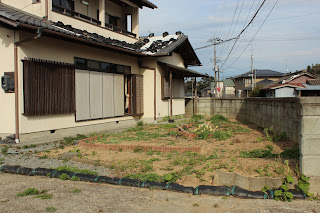
I couldn't help but take this photo on the highway today...


Thursday, March 21, 2019

We are blessed to live in Fukushima

One of the joys of coming to Fukushima is to meet young people who are committed to Fukushima and want to dedicate their lives to serving their homeland even after so many other young people have left Fukushima in search of better futures, better education and better jobs.


The children who just finished elementary school 8 years ago at the time of the 3/11 triple disaster are now young adults studying in universities or working. They are the direct fruit of the faithful ministry of Reverends Yoshio and Toyomi Sanga at Grace Garden Chapel in Koriyama. These young people spent their entire teenage years learning to serve their hurting neighbours in the most practical ways by serving the disaster victims in their communities. During high school, they formed music bands and created music to offer safe places for other teenagers to hangout after school. They volunteered helping after-school programs for young children or helping at their church. These "kids" that I knew are now young adults preparing themselves to serve Fukushima in the near future as they are now all in their twenties, not teenagers any more.

"20" is a big year in Japan as there is a public ceremony in January for young people turning 20 that year in every local community.  These young attended the public ceremony of the rite of passage. This means that these people are not children any more and they are responsible for their own life. So I asked them to share a highlight of the year since I saw them last year.

Noah is a dietician working in the food industry. Noah loves food and loves cooking and serving food. She and a few other young people from the church went to Hiroshima after a bad flood and landslide to help in the relief work. Serving gives her joy.

Yui is studying to be a kindergarden teacher.  Her biggest news this year is that her parents accepted Jesus and started attending church. Yui started coming to church as a child by herself and her parents were not supportive of her becoming Christian. After praying for them for a long time, they finally accepted the faith Yui demonstrated to them day in, day out. "It was God's divine timing and God's way is so unique," Yui said with a smile.

Ayana's highlight of the year was that she went to Hawaii on a short term mission trip with a few other young people from her church. During high school she had to persevere under pressure (and persecution) from her parents because she became Christian. Praying for her family is her ongoing mission.

Kota is not a Christian but found a family and friends when he first stepped into the door of Grace Garden Chapel. He had been introduced to a church before when he was living in Tokyo but it didn't mean much to him as he didn't know how to related to people there. He comes from a family that do not value religion but after he moved back to Fukushima he started hanging out with these wonderful young people here who made him feel welcomed like his own family.

Yui turned 20 this year. For Yui, this meant that she can decide matters of her own life and she decided to be baptized, finally. Her parents are against Christianity and never allowed her to be baptized until she turned 20. The first thing she wanted to do is to make a public statement of following Jesus! She is very happy as a baptized believer now.

Akito studies psychology and social work in university in Fukushima because he wants to serve suffering people in Fukushima. He is passionate about the younger generation. He is passionate to see children and youth thriving at church. His highlight of the year is that he was able to lead some of the high school students to Christ he teaches at a cram school (as his part-time job while studying at university).

I met Akito when he was just a kid after elementary school. He was following his parents to go to the evacuee shelters to serve disaster victims. A few years ago he was still in high school busy studying and making and playing music with friends, Akito already demonstrated a deep faith in Christ and prayerful thoughts. When I asked him about what he thought of Fukushima and disaster as a teenager, this is how he answered.
"It's like the story of the blind young man in John's gospel (ch. 9). It's not his sin that he was blind, but it is to glorify God. It is not our fault that we live in Fukushima or that Fukushima had the terrible disasters. Some say we are cursed, and others urge us to escape from here. But I believe we are blessed to live in Fukushima and serve the hurting people here, because we know Jesus and have hope in him." 
These young people are the true future of Fukushima and the hope for the coming generation!


Wednesday, March 20, 2019

Pray for Ken and Seiko Nishiono and their three daughters

I am writing today to ask you, the reader of my blog and your friends and families to pray with me for Rev. Ken Nishiono and his family, especially his two youngest daughters' health. As Mother Teresa would say, "we can storm the heaven with our petitions and prayers," and this is one of the reasons I started my blog 8 years ago for Fukushima. Yesterday we visited Miharu to meet with Ken briefly to pray together. With his permission, I write his story to assist you in praying.

Ken's second daughter, Yuzuri (2 years old), was diagnosed with Guillain-Barre Syndrome a few months ago and has been on treatment; now his youngest daughter, Megumi (1 year old), is in hospital since last week with some kidney issues which the doctors are trying to diagnose so that they can come up with a course of treatment. While Seiko stays in hospital with Megumi, Ken is looking after the two older ones. Thankfuly, Miyu (4 years old) is healthy but feels the stress of the burdens of the family.

Family photo in April 2018 soon after Megumi was born.
Ken, Miyu and Yuzuri during our visit yesterday.
"I understand now how much work it takes to take care of domestic duties and raise three children," said Ken as we sat down to pray with him and his two children at the church while his wife and the youngest one were staying at the hospital. Japanese men seldom get involved in family matters or raising their children as it is all left for the wife to do while men go to work and bring money home. Ken has now new appreciation for all that his wife does at home.

Rev. Ken Nishiono and his wife Seiko are the only two people I know that have never left Fukushima since they arrived as volunteers soon after the 311 disaster in 2011 while thousands of other volunteers left after their assignments or quit after being burnout. They both came unmarried and got married a couple years after they first met while working as relief volunteers.

A few years ago, Ken received an invitation to join a local church as associate pastor and became ordained two years ago. Soon after his ordination, his mentor and predecessor at Koriyama Bible Baptist Church in Miharu town retired and Ken became the pastor of the church. (For the story of how Ken came to this church and his testimony, click here)

"I began feeling a bit depressed and exhausted a few months ago thinking it's too hard to be a pastor and started doubting my call to a pastoral ministry when Yuzuri's sickness was first diagnosed," his small voice got quieter with his shoulders gradually sinking lower and lower as he continued to talk.   By having to drive a long distance back and forth between the church and the children's hospital for his daughter's treatment for many days while he continued to struggle with many duties all alone at his church, he began to understand the meaning of Christ's suffering. "I meditated this morning while I was doing dishes, since my wife is away with our youngest daughter in the hospital, what it means to follow Jesus in his suffering. I began to see my role in this church in a new way."

We said our good-byes and promised to pay a visit again next year and to pray for his family in the meanwhile. Our hearts were heavy for the burden Ken and Seiko carry but were encouraged by his ever deepening testimony.


Church fellowship after Sunday worship (April 2018)


Tuesday, March 19, 2019

Fact-based education helps to eliminate fear of radiation

The first site we visited is Commutan Fukushima (https://com-fukushima.jp/). Its actual long name is Centre for Environmental Creation Communication Building, Commutan ('Commutan' is sort of Japanese-English to emphasize communication and community). This is run by the prefectural government to communicate the current status of the Fukushima nuclear disaster recovery as well as environmental and educational research to build a future for Fukushima with a more sustainable environment. (Unfortunately the website doesn't have anything in English, but most of the signs in the exhibition hall are done in Japanese and English.)

This is not a disaster memorial, which focuses on the disaster and the power of memory to educate the future generations, but a testimonial, which focuses on the communal efforts by both the Fukushima government and people for the present living conditions and for the future environment of Fukushima. So the emphasis of all statistical information is on the timeline and the changes in trends, i.e., how Fukushima is steadily reducing the level of radiation and how its people are working toward increasing the signs of recovery in wild plants, the air dose rate of radiation, the number of evacuees to this date, and so on.  For this purpose, simple wooden blocks are used to display numbers to show up to date changes.

For example, in 2012, there were over 165,000 evacuees in Fukushima; today that number has reduced to 42,104 people.
Number of evacuees: trends since 2012 in different parts of Fukushima
42104 Evacuees as of January 31, 2019

One of the major areas of education is food safety. Now all brown rice grown in Fukushima is well below the standard level of radiation and only .15% of wild vegetation show the risk of radiation exposure.


Mr. Kiyoshi Sasaki is the Director of Education at Commutan and he explained to us the importance of food safety education they provide to visitors. He was a science teacher at a local middle school and now works at Commutan to educate a broader audience about the importance of Fukushima disaster recovery and of creating a sustainable future for Fukushima. According to Mr. Sasaki, food safety education must teach the facts about radiation to reduce the fear of radiation as it is not simply about abstract knowledge of radiation, but it must help consumers make choices about their grocery shopping. Food grown in Fuksuhima is safe. That's the fact!


Fear vs. fact.
That is the constant battle about radiation in Fukushima. Unfortunately, most of us, who only read about Fukushima and do not have to deal with daily life choices that we think mundane and insignificant such as grocery shopping, often are blinded by media-generated fear. Perhaps learning the facts will reduce the fear.

Another way to reduce the fear, an even more power evidence than the fact-based education, is to meet the people of the faith who have never left Fukushima even when the fear and threat of radiation was so much higher than what it is today. 

Fukushima, here we come!

Visiting Fukushima has become my Spring routine for 8 years now. After a long flight of 9 and a half hours from Vancouver, I arrived in Narita Airport yesterday. Here one can witness a true example of Japanese speed and efficiency of organizing crowds and chaos into an order. They definitely have an art form of doing this, and they do that very quickly. Several hundreds of people from a few planes that landed around the same time flooded into the immigration lines and then these people were quickly "processed" by the airport immigration officers in several steps in a very short time, compared to so many other countries' airports. Shortly after exiting customs, I discovered the big posters of the upcoming Tokyo Olympic games and mascots welcoming visitors. The nation has moved forward. 311 Tohoku disasters are long gone in history. Fukushima has faded away in the nation's conscience.


The long haul flight from Canada to Japan helps me to remember I am entering yet another foreign land. But the transition from Tokyo to Fukushima is always a harder one. This is partly because Tokyo somehow feels much closer to Vancouver, which is on the other side of Pacific Ocean, than to Fukushima, which is just 1 hour and 20 minutes by bullet train.

I stayed with the Otake family at Seibou Christ Church in Inchikawa (I wrote a story of this church during my first visit in March, 2015: to read, click here) last night before starting the journey to Fukushima this morning. Kengo and Tomiko, Shihoko's parents and lay pastors of this church, always demonstrate the finest form of Japanese hospitality whenever I visit them. It is such a home-coming feeling here in Japan after a long flight, and especially before my trip to Fukushima, where I anticipate  feelings of greater emotional distance from Tokyo.

Kengo and Tomiko Otake
Ken and Shihoko flew from Vancouver a few days ahead of me and Midori joined this morning from Yokohama. The four of us drove for three hours to Koriyama where we meet the two other members of our group, who have never been to Fukushima. This year we are trying out a different way of traveling in Fukushima as we welcome a few members of our trip along the way for different lengths of the journey. Stay tuned for the story yet to unfold this week!

Tuesday, April 17, 2018

Ora Et Labora

This famous Latin phrase means Prayer and Labour.

It summarizes Benedictine Monastic spirituality and its impact on the western civilization for the past 1600 years. Prior to Benedictine monasticism, Eastern orthodox monasticism viewed the commitment to Jesus as devotion to an ascetic, spiritual life away from the civilized world, alone out in the desert where you encounter God. That is what we know as the life of desert fathers and mothers in the first five centuries of the church history.  Ascetic monastic life was a symbol of following Christ in suffering and detachment from the power and corruption of the religion of Constantinople.  

St. Benedict of Nursia (AD 480-547) wrote the Rule for his followers and began a different kind of monastic life, a communal life devoted to prayer to the heavenly father and study of Scripture, and manual labour on earth. The monastic life was not only connected to heaven, but also depended on the earth. By getting their hands dirty and relying on what the earth produced and dedicating their life of prayer and study, they left a legacy of abundant spiritual and material wealth for the generations that came after them. Benedictines accidently became the leaders of Western civilization and cultural and scientific inventions. (They invented eye glasses, clock, and beer, and many more. There are famous artisan craft beer brands using the methods developed by ancient Benedictines!)

Benedictine monks take land and stability seriously: wherever they are placed, they are there for the long haul. Stability is the most profound foundation for whatever Benedictine monks did for God and for their neighbours and in creation. For Benedictines, cultivating the land was a form of prayer as much as prayer was a form of labour, as they called prayer “divine office.”

Why does this matter to Fukushima? 

Many of the evacuees from the 20 Km evacuation zone around Fukushima Daiichi began to return to their homes, many others decided not to return. Yet, many more, mostly young people and families with young children, left Fukushima for good. As of the 2017 census, about 7000 people returned to the reopened area in the evacuation zone. That’s roughly 10% of the population before the disaster.


A nuclear power plant and its surrounding communities were a symbol of power and money, of materialism and consumerism of our culture today. But the 20 km zone surrounding Fukushima Daiichi, has become a man-made desert in the 21st century. That is Futaba district (consisting of 6 towns and 2 villages shown on the map) today. 

Since I met Rev. Sumiyoshi for the first time in April 2011 he has been serving the disaster stricken areas in various ways with his unbending vision of "Gospel (fukuin) for Fukushima, Happiness (kofuku) for the people of Fukushima, and welfare (fukusi) of Fukushima." The common concept in all of this is "fuku" in kanji, which can be translated to happiness. Every time I visit him and his wife at their church, they share with me the unique ways God has been leading them to serve the people in Fukushima, beginning with the remarkable encounter with Jesus in Rev. Sumiyoshi's dream soon after the disaster (click here to go to the story in April 2011) 

Through the last seven years of experience and trials and errors, Rev. Sumiyoshi has gained wisdom and built a network of pastors, theologians and other Christian leaders for ministry and accountability. He is now moving forward with a new season of ministry, especially with an inviation to start a prayer house, which will eventually become a local church in Tomioka twon, just 10 km south of Fukushima Daiichi nuclear power plant. 

This time Rev. and Mrs. Sumiyoshi invited me and Midori to visit the prayer house and join them in the repair work. The neighborhood was not located on the coast and was protected from the tsunami. But it was badly affected by the earthquake; we could see the empty lots in what used to be a typical Japanese rural town with high density housing. 
View from the second floor of the house

View from the second floor of the house
Front yard of the property: Empty garden
Rev. Sumiyoshi explaining the vision
   "Our vision is to repair the house by the hands of volunteers who are sent by God. Our plan is to rely on God's flow and do whatever we can to obey him. I am glad that you got to go join us in the labour today!" Rev. Sumiyoshi showed us around the property and the vision for each room in the house. Then we prayed for the work we were about to do and Rev. Sumiyoshi joined the three men fixing the roof. These men were pastors who were too busy in their church ministries to do any "manual work." In today's church life, pastoral ministries such as teaching, preaching, and pastoral care, have become everything that one's congregation needs her pastor to fill, but that doesn't seem to include manual work. This is not simply a phenomenon in Japan, but in many other places the gospel has become truncated to a gnostic, spiritual message only. 
Three pastors fixing the roof

Midori, Mrs. Sumiyoshi and I got to dust and clean whatever that was not broken by the earthquake. While we were cleaning the house, we discovered many shamanistic charms hanging in the rooms, also hidden between the roof and the ceiling. The powers of the earthly gods couldn't protect the house or the people in it from the earthquake. As we were taking those charms down, we prayed not only for physical cleansing, but also for spiritual cleansing of the house and its neighbourhood. 

That night, my hands were tired after dusting and cleaning, and my throat was sore after inhaling the dust gathered for seven years. But my heart was filled with joy after seeing a vision that testifies to a powerful God when the gospel of Jesus Christ is preached through the work of hand fixing a roof and cleaning the dust and cobwebs.

Monday, April 16, 2018

Caring for Our Common Home

This is an urgent plea from Pope Francis, written in his second letter to the Roman Catholic Church called, Laudato Si, which means "Praise be to You," quoted from St. Francis of Assisi.

The official letter is found in this link: https://laudatosi.com/watch.

Here's also a link to a short video summarizing the letter, posted by Catholic Aid for Overseas Development (CAFOD) in the UK.


The Catholic sisters I met in Naraha and I had a good chat about our common faith in Jesus and common call to care for creation with Laudato Si and the wonderful Christian conservation organization, A Rocha International (www.arocha.org), which I became involved with in recent years.

Earth is not a resource for us human beings to consume and waste as we wish. It is our common home and home for all creation. We, humans, selfishly have hurt it for so long, but we are the only creatures that are given the gift of conscience and moral will to repent and change the course of our action. Caring for God's creation begins with a renewed mindset.